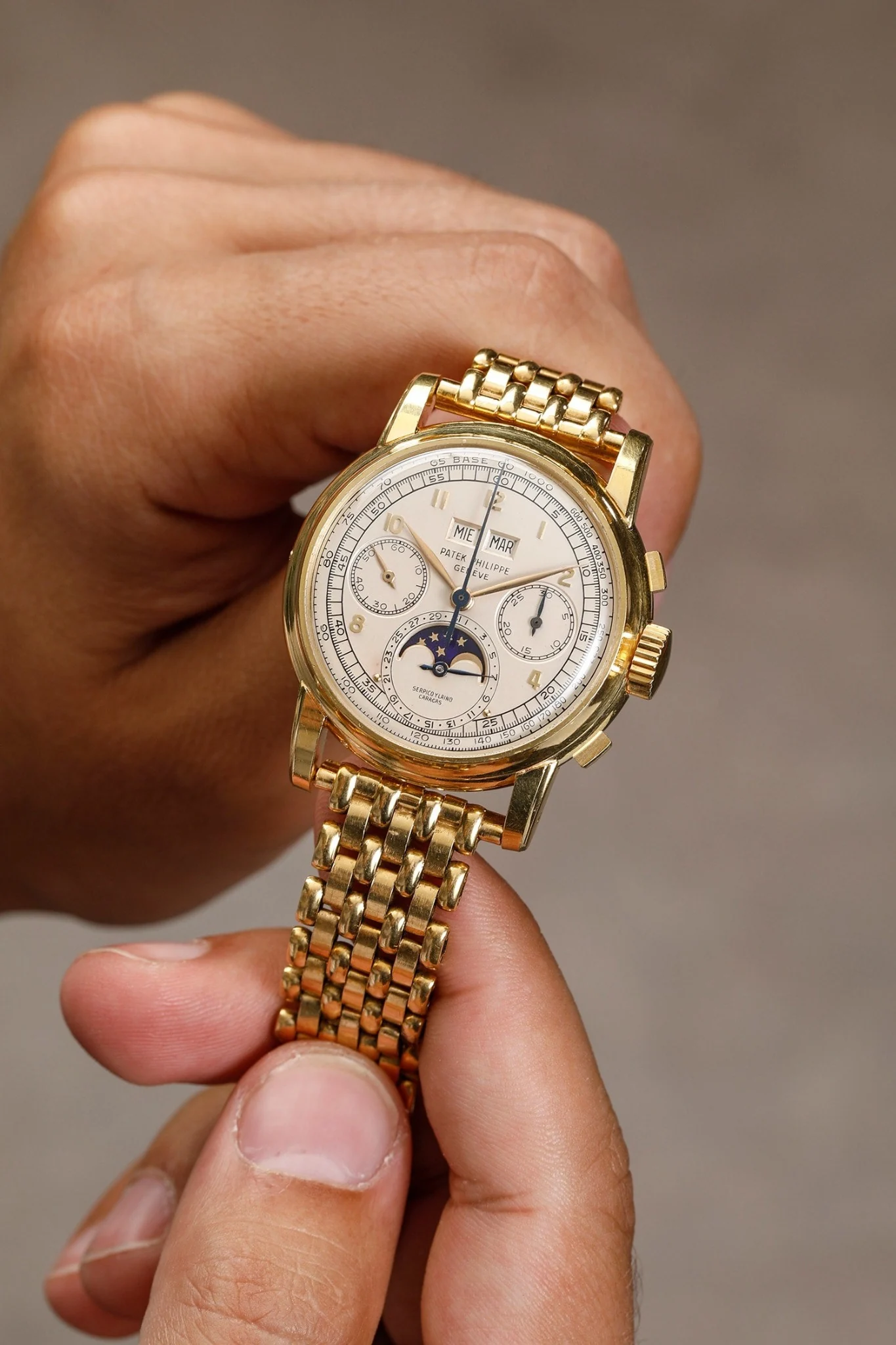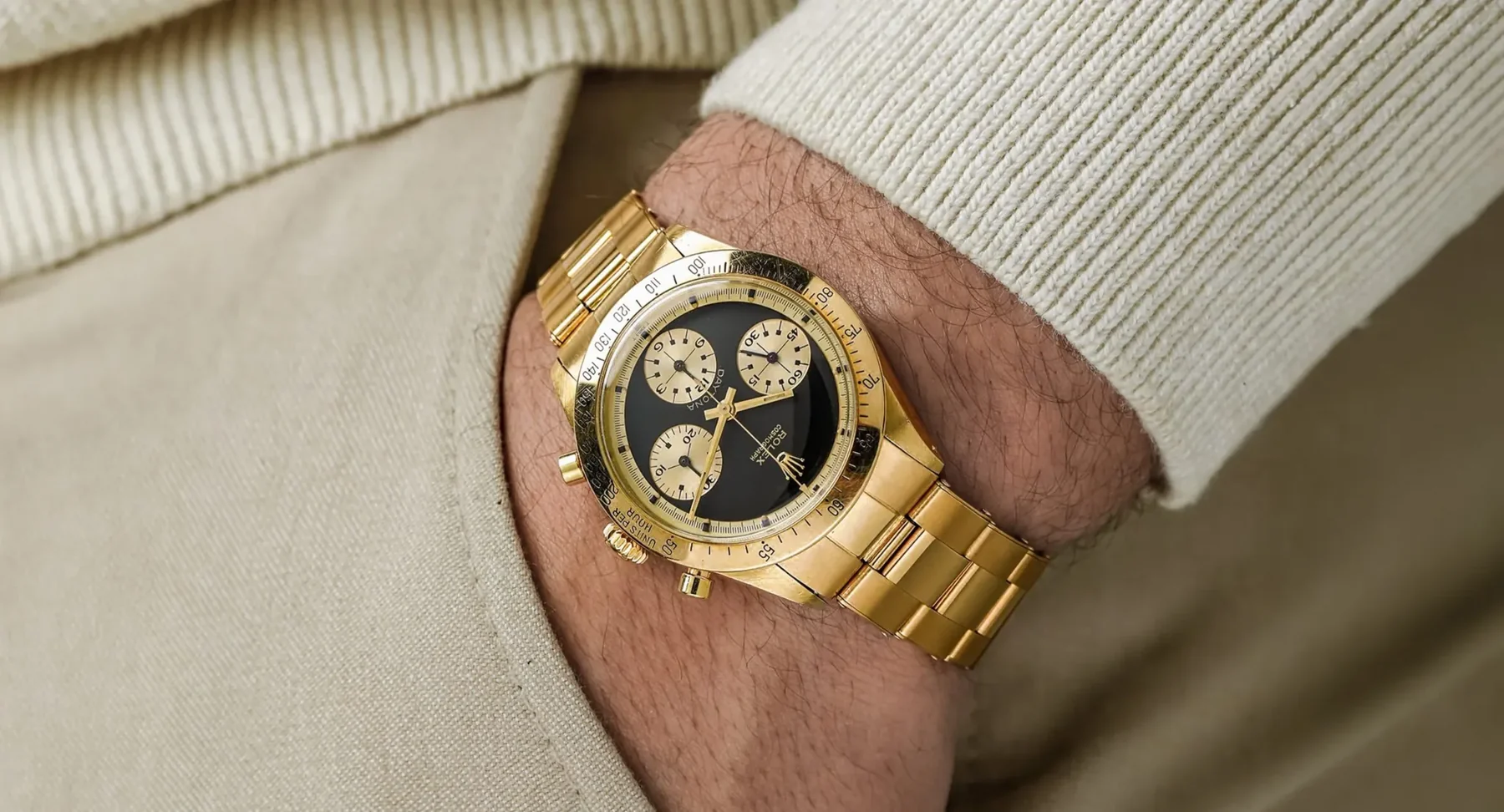
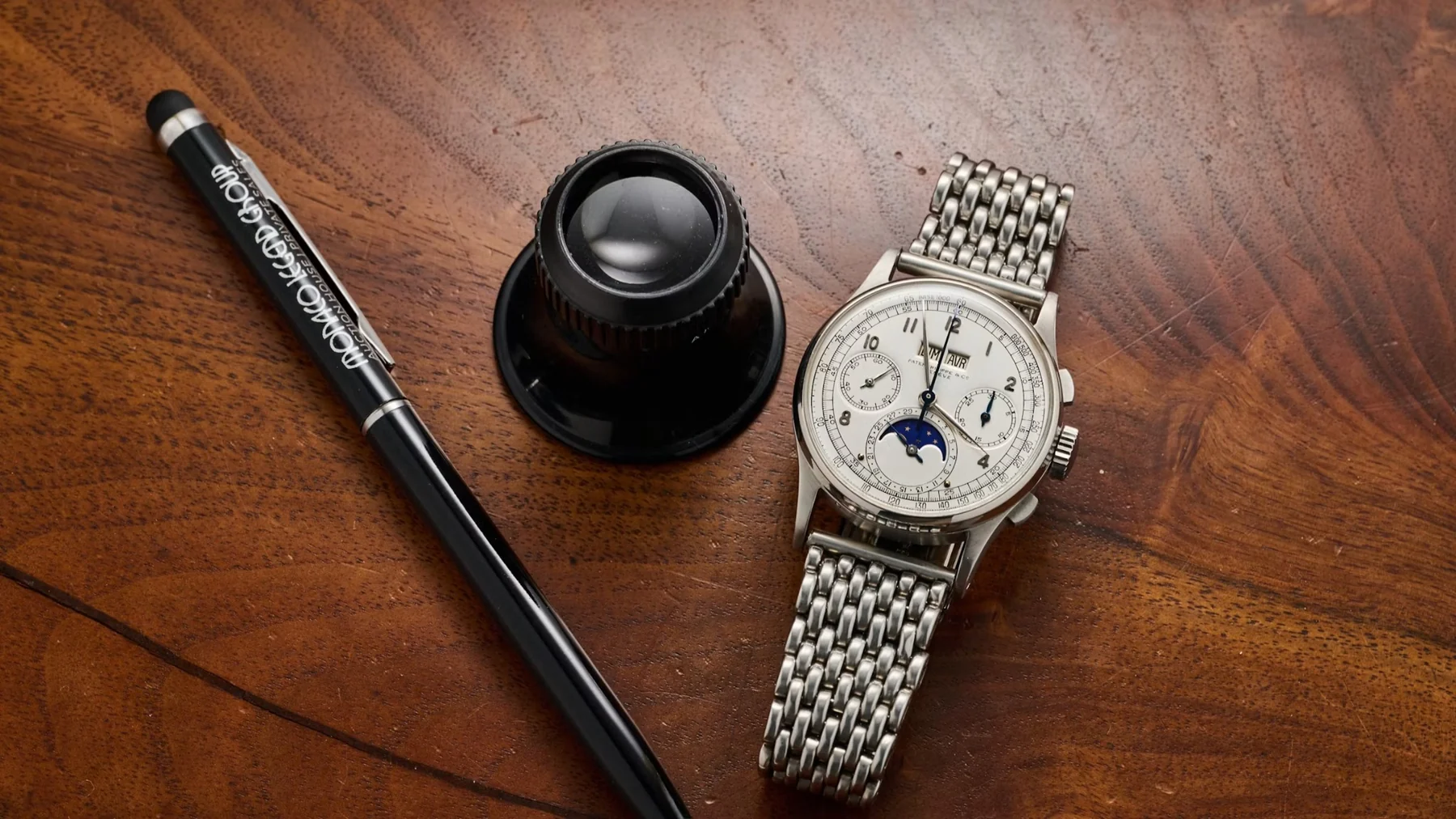
01 · ContextStart with the object.
Choose a brand and enter the serial or movement number to estimate when the watch was produced.
A serial number is a clue, not a verdict. Date My Watch brings established specialist tables, movement context and archive references into one restrained research workflow.
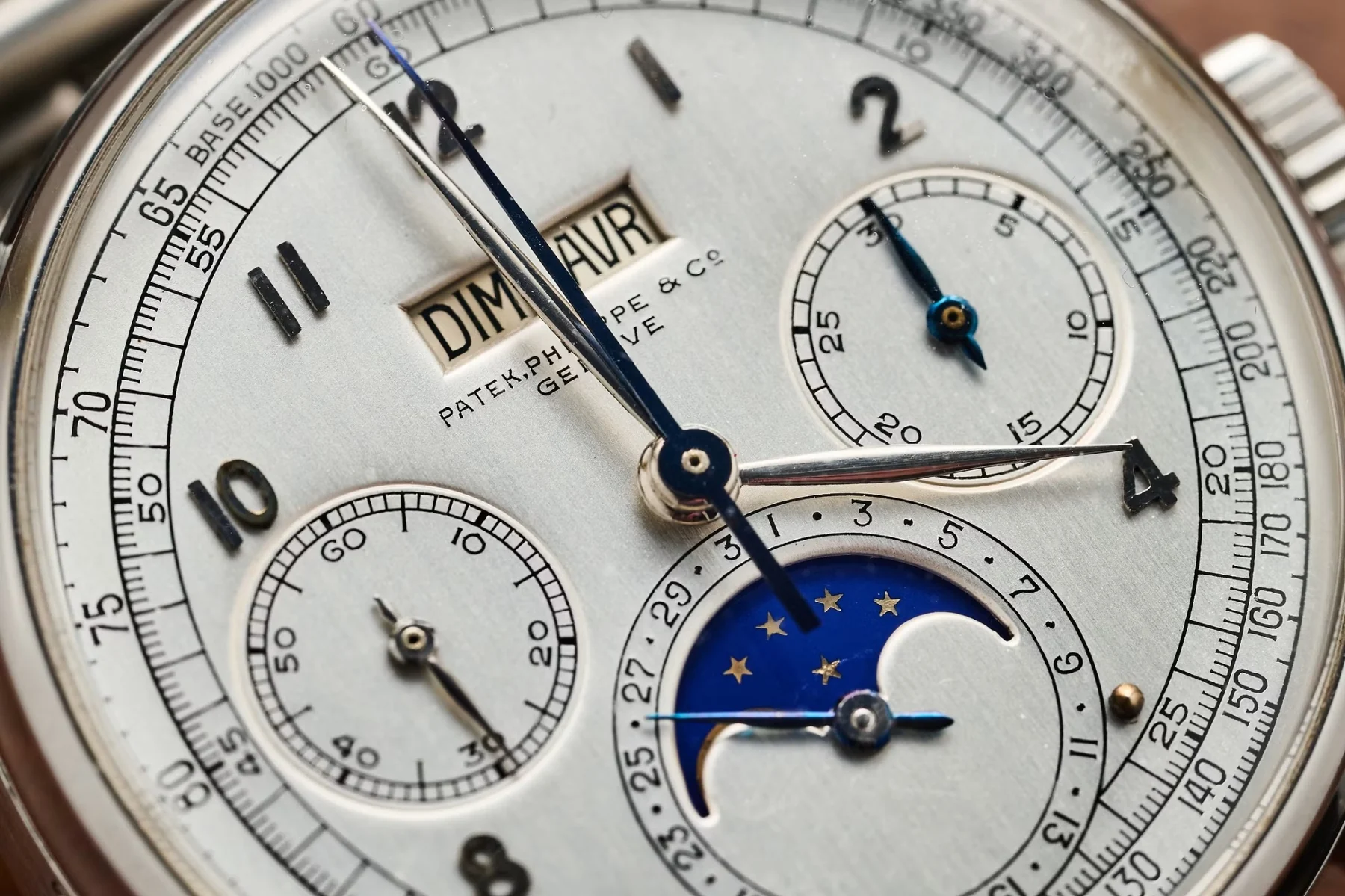
Rolex · Omega · Tudor · Patek Philippe · Audemars Piguet · Breitling · Longines · IWC · Jaeger-LeCoultre · Vacheron Constantin · Zenith · Universal Genève · Tissot · Certina · Bulova · Panerai · Seiko · Citizen
For Waltham, Elgin, Hamilton and other American makers, start with the serial stamped on the movement.
Hallmarks and production codes can settle the details that a serial number cannot — alongside a live daily gold-price reference.
Decode the Swedish year designation used on precious-metal objects since 1759.
Date a historical Rolex bracelet clasp. Month suffixes are decoded where documented.
Decode the PATEKHRONS cipher found on many 20th-century Certificates of Origin.
Direct cash price · SEK per gram.
Generic solid-gold dress watches where the value is mainly gold-driven. No brand, movement or strap adjustment.
Estimate a likely hammer price from today’s Kaplans direct cash gold price and recent Bukowskis auction behaviour. The model is intended for gold-value-driven watches, not collectible rarities.
Each result explains its dating basis: an exact archive match, an estimate from comparable documented watches, a published serial table, or a date code. When the evidence is insufficient or contradictory, the result asks for more information.
Dates can refer to manufacture, archive registration, delivery or sale. These events are kept separate. A serial number can help date a watch; it cannot establish authenticity.
Archive evidence: this build includes 2,579 archive-backed records across nine brands, including Jaeger-LeCoultre Atmos. The total counts Longines once per movement number, even when it has several dated events. Longines now also uses a clearly labelled secondary archival-database tier for exact matches and conservative fallback interpolation; directly inspected Extract evidence remains the higher tier. For Omega Speedmaster, SpeedyBase’s ★ Extracts registry is used only as a secondary discovery/coverage layer: an entry becomes a strict DateMyWatch archive anchor only when the serial and extract-backed date can be independently tied to an original or public source. I Love My Speedmaster is handled the same way: its prediction output is never treated as an Extract, while publicly disclosed full-serial Extract datapoints from the underlying research can be used with their original source attached; masked or reconstructed serials are excluded. Open “View archive records” in a search result to see the documented watches and their sources.
Estimates use comparable records only where the numbering sequence and available evidence support a meaningful comparison. Reference and caliber can help narrow the result. The displayed range reflects uncertainty; it is not a guarantee or a replacement for the manufacturer’s own archive document.